
Inclusive practice in early years education helps every child feel welcomed, valued and able to participate. It recognises that children have different strengths, identities, experiences and support needs, and that these differences should be understood rather than treated as obstacles.
For parents, an inclusive nursery is one that gets to know their child as an individual, works closely with their family and adapts its environment or approach when something creates a barrier to learning, play or belonging.
In this article, we explain what inclusive practice means, why it matters and what parents can look for when choosing an early years setting.
What Is Inclusive Practice?
Inclusive practice is an approach that aims to give every child meaningful access to care, play and learning.
It considers the individual child rather than expecting everyone to participate in exactly the same way. This may involve changing an activity, providing additional resources, adjusting the environment or giving a child more time and support.
Inclusive practice can involve responding to differences in:
- Age and stage of development.
- Communication and language.
- Special educational needs and disabilities.
- Physical or medical needs.
- Culture, race, religion and family background.
- Home language.
- Interests, confidence and previous experiences.
- Sensory and emotional needs.
Inclusion is relevant to every child. It is not limited to children with a diagnosis or an identified special educational need.
Equality Does Not Always Mean Everyone Gets the Same
Treating children fairly does not necessarily mean giving every child exactly the same support.
One child may take part in a group activity without any changes. Another might need a quieter space, a visual prompt, adapted equipment or extra time to understand what is happening.
The aim is not to lower expectations or separate the child unnecessarily. It is to remove or reduce the barrier so that the child has a genuine opportunity to participate.
Effective inclusion therefore combines high expectations with appropriate individual support.
Why Is Inclusive Practice Important in Early Years?
The early years are a significant period for children’s communication, relationships, confidence and understanding of the world.
When children feel secure and accepted, they are better placed to explore, communicate and become involved in nursery life. Feeling that they belong can also support their confidence when forming relationships and trying unfamiliar experiences.
Inclusive environments benefit the whole group. Children encounter people with different personalities, abilities, cultures and ways of communicating. With sensitive adult guidance, they can begin to understand that differences are a normal part of their community.
Inclusive practice in early years can help:
- Create a sense of safety and belonging.
- Reduce barriers to play and learning.
- Support communication and participation.
- Strengthen children’s confidence and independence.
- Encourage empathy, cooperation and respect.
- Help practitioners identify support needs promptly.
- Give parents confidence that their knowledge and concerns will be heard.
Inclusive Practice and the Law
The old idea that inclusive practice is optional is incorrect. Early years providers have legal and statutory responsibilities relating to equality, disability and special educational needs.
The Equality Act 2010 protects people from unlawful discrimination. Providers also have duties relating to disabled children, including making reasonable adjustments so that they are not placed at a substantial disadvantage.
The Early Years Foundation Stage sets standards for children’s learning, development, care and safety. Early years providers must also have arrangements for supporting children with special educational needs or disabilities and must consider the relevant SEND guidance.
Parents can find an official overview on the GOV.UK Supporting SEND page.
A reasonable adjustment depends on the individual circumstances. It might involve adapting a routine, changing the arrangement of a space, providing an appropriate aid or presenting information in a more accessible way.
What Does an Inclusive Nursery Look Like?
Inclusion should be visible in everyday practice rather than limited to a written policy.
An inclusive nursery considers who can access its rooms, resources, routines and activities. Practitioners observe how children respond and make changes when an aspect of the provision is preventing a child from becoming involved.
Parents might notice:
- Practitioners speaking warmly and respectfully to every child.
- Resources that reflect different families, cultures, abilities and experiences.
- Books and images showing a varied and realistic community.
- Activities that can be accessed or adapted in more than one way.
- Children being given time to communicate and respond.
- Quiet areas for children who need a calmer environment.
- Visual prompts or objects used alongside spoken instructions where helpful.
- Suitable physical access to the spaces and resources children use.
- Positive communication between practitioners and families.
You can see more of Hunny Pot Nursery’s rooms and learning environments on our Explore Nursery page.
Adapting Activities Without Excluding Children
Adaptation begins by considering what a child may find difficult and why. Practitioners can then identify changes that support participation without unnecessarily separating the child from the group.
For example, a child might benefit from:
- A smaller group or quieter position during a busy activity.
- A demonstration before being expected to join in.
- Pictures, gestures or physical objects to support communication.
- Larger or easier-to-hold tools.
- Additional time to process a question or complete a task.
- A gradual introduction to an unfamiliar texture, sound or routine.
- Help from a familiar practitioner when joining a new experience.
Practitioners should avoid making assumptions based only on a label or diagnosis. Two children with the same identified condition may have different strengths, preferences and support needs.
Likewise, children should not be categorised using fixed ideas such as being only a “visual learner” or “physical learner.” A flexible combination of communication, demonstration, play and direct experience is usually more useful.
Representing Different Families and Communities
Children should be able to see aspects of themselves and their families reflected positively within their nursery environment.
Books, dolls, figures, music, photographs, role-play resources and celebrations can introduce children to a wide range of people and experiences. These resources should form part of normal nursery life rather than appearing only during a special event.
Representation should be thoughtful and accurate. Practitioners should avoid stereotypes and should involve families when learning about cultures, languages, beliefs or traditions that are unfamiliar to them.
Children can also be supported to respond respectfully when they notice a difference or ask a question. Calm, age-appropriate explanations help children learn without suggesting that the subject is embarrassing or forbidden.
Supporting Children Who Use More Than One Language
A child who is learning English alongside another language should not be treated as though they lack ideas or understanding.
Practitioners can use gestures, pictures, familiar objects, songs, repetition and consistent routines to support understanding. Learning key words from the child’s home language may also help the child feel recognised and welcomed.
Families should be encouraged to continue using the language in which they communicate most naturally at home. A strong home language can support relationships, identity and wider language development.
The Role of the Key Person and SENCO
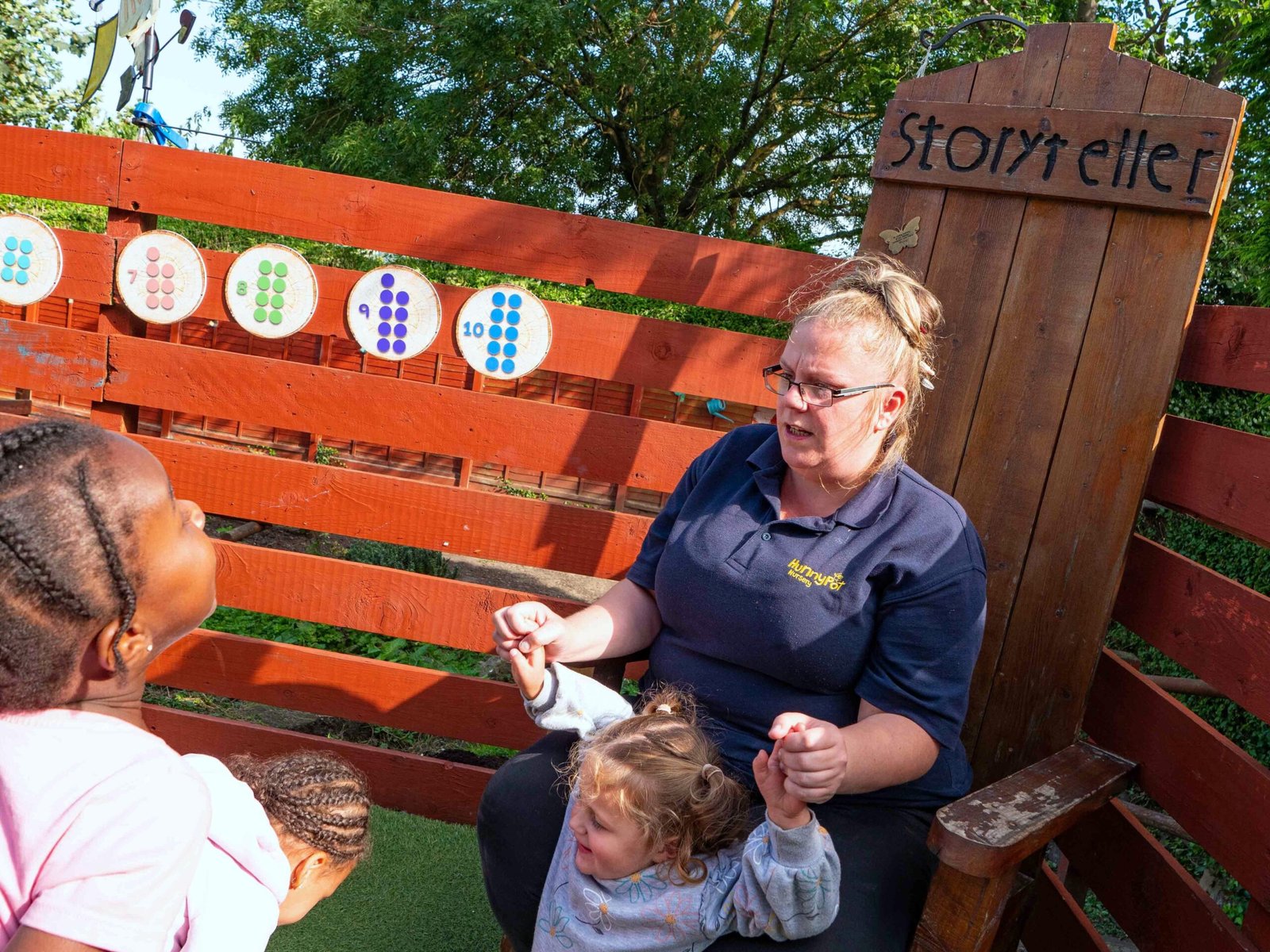
A child’s key person helps build a consistent relationship between the child, family and nursery. By getting to know the child closely, the key person can recognise their interests, communication, routines and responses to different situations.
Early years settings must also have arrangements for supporting children with special educational needs or disabilities. The setting’s Special Educational Needs Coordinator, commonly called the SENCO, helps coordinate this work.
Where appropriate, practitioners may work with parents and other professionals to understand a child’s needs, agree suitable support and review whether the approach is helping.
Support should not depend on a child receiving a formal diagnosis before reasonable and appropriate steps are considered. If practitioners or parents notice that a child may need additional help, early discussion is valuable.
Working in Partnership With Parents
Parents know their children in ways that a nursery cannot immediately replicate. They can explain how their child communicates, what helps them feel secure, what they enjoy and what they find difficult.
Practitioners can contribute observations from the nursery environment and explain what they have tried. Sharing these perspectives helps everyone build a fuller understanding of the child.
Good communication should be respectful and two-way. Families should feel able to ask questions, express concerns and understand how decisions about their child’s care and learning are being made.
Questions to Ask When Choosing an Inclusive Nursery
When visiting a nursery, parents can ask practical questions about how inclusion works in everyday situations:
- How do you get to know each child’s routines, interests and needs?
- Who is the setting’s SENCO?
- How do you adapt activities when a child cannot access them as planned?
- How will my child’s key person communicate with me?
- How do your books and resources represent different families and communities?
- What quiet or lower-stimulation spaces are available?
- How do you support children who use more than one language?
- How are concerns about a child’s development discussed and reviewed?
Look at how practitioners interact with children as well as the answers they give. Warmth, patience and respect should be visible throughout the setting.
Inclusive Practice at Hunny Pot Nursery
Inclusive practice in early years is about belonging, participation and appropriate support. It recognises each child as an individual and responds when an environment, routine or activity creates a barrier.
At Hunny Pot Nursery, we aim to provide a welcoming environment in which children are known and supported as individuals. Our team works with families to understand children’s interests, routines and needs throughout their time with us.
You can learn more about our nursery on the About Us page.
To meet the team, discuss your child’s needs and explore the nursery, book a nursery tour.
Pingback: Choosing the Right Nursery: School or Day Nursery?