
If you are choosing childcare, you may be wondering: what is Ofsted, what does an inspection report tell you and how much should it influence your decision? Ofsted reports provide independent information about registered nurseries, but they are most useful when combined with your own visit, questions and impressions of a setting.
This guide explains how early years inspections work, what the current Ofsted grades mean and how parents can use a report when comparing nurseries.
What Is Ofsted?
Ofsted is the Office for Standards in Education, Children’s Services and Skills. It is a government department responsible for inspecting and regulating services that provide education and care for children and young people in England.
For registered early years settings, Ofsted checks whether children are receiving appropriate care, education and protection. Inspectors consider what children experience at the setting, how practitioners support their development and whether safeguarding requirements are being met.
You can learn more about the organisation on the official Ofsted website.
How Nursery Ofsted Assessments Have Changed
Ofsted changed the way it reports inspection findings in November 2025. Nurseries inspected under the current framework no longer receive one overall effectiveness grade covering the entire setting.
Instead, parents receive a report card containing separate grades for different areas of the nursery’s work. This provides a more detailed picture by showing where a setting is performing particularly well and where attention or improvement may be needed.
Older inspection reports remain available on Ofsted’s website. These may still show the previous overall judgements of Outstanding, Good, Requires Improvement or Inadequate because they were completed before the report-card system was introduced.
The old and new grades are not directly comparable. Always check the inspection date and read the written findings rather than relying only on a grade or colour.
Understanding the Current Ofsted Grades
Under the current report-card system, each evaluated area may receive one of five grades:
- Exceptional: The aspect of provision is substantially exceeding the expected standard and making a particularly strong difference to children.
- Strong standard: Practice is consistently strong and goes beyond the expected standard.
- Expected standard: The setting is meeting the standard expected for that area.
- Needs attention: An aspect requires improvement, although the concern is not judged to require urgent action.
- Urgent improvement: Significant improvement is required and Ofsted may take further action or inspect the setting again sooner.
Safeguarding is reported separately as either met or not met. Parents can read Ofsted’s full explanation in its guide to report cards and grades.
Areas Considered in Early Years Settings
Early years inspections consider several connected aspects of children’s care, learning and development. The current inspection framework includes:
- Safeguarding: Whether effective arrangements protect children from harm.
- Inclusion: How well the setting identifies and meets different children’s needs.
- Curriculum and teaching: What practitioners want children to learn and how effectively they support that learning.
- Achievement: What children learn, remember and become able to do.
- Behaviour, attitudes and establishing routines: How the setting helps children participate, form positive relationships and become familiar with appropriate routines.
- Children’s welfare and wellbeing: How the setting supports children’s physical and emotional wellbeing.
- Leadership and governance: How effectively the setting is managed and continuously improved.
Inspectors consider the ages and needs of the children attending the setting. They should not expect every nursery to provide identical activities or organise its rooms in exactly the same way.
A strong setting should be able to explain how its environment, routines and interactions support the particular children in its care. Read more about how individual needs can be supported in our guide to inclusive practice in early years.
What Happens on the Day?
During an early years inspection, the inspector gathers evidence about children’s everyday experiences. This may involve:
- Observing children as they play, learn and follow daily routines.
- Watching how practitioners communicate and interact with children.
- Discussing the curriculum with the nursery’s leaders and staff.
- Considering how the setting supports children with additional needs.
- Reviewing safeguarding knowledge, procedures and relevant records.
- Looking at how staff understand children’s interests, development and next steps.
- Speaking to parents or considering their feedback where possible.
- Discussing the setting’s strengths and areas for improvement with its leaders.
The inspector is not simply looking for attractive rooms, large quantities of paperwork or identical activities for every child. The important question is whether the provision is safe, inclusive and effective for the children who attend.
Finding and Reading the Published Ofsted Findings
You can search for a nursery through the Ofsted reports website. Searching by the setting’s name, address or unique reference number can help you find the correct registration.
When reading the report, look beyond the headline grades and consider:
- The date on which the inspection took place.
- Whether it uses the older overall judgement or the newer report-card system.
- What the inspector says children experience each day.
- Comments about safeguarding, inclusion, teaching and wellbeing.
- Areas identified as particularly strong.
- Anything the nursery has been asked to improve.
- Whether the setting has changed its leadership, staff, rooms or approach since the inspection.
An inspection report records what inspectors found at a particular point in time. If the report is several years old, ask the nursery what has changed and how it has responded to any recommendations.
Looking Beyond the Published Results
An Ofsted report is a valuable independent source of information, but it should not make the entire decision for you. Even a detailed report cannot tell you exactly how your child will respond to the people, routines and environment at a nursery.
A report also cannot fully show the atmosphere of a setting, the quality of its current relationships or how staff communicate with individual families. These are things you can understand more clearly by visiting the nursery yourself.
Use the report to identify useful questions rather than treating it as a substitute for a visit. Consider whether the nursery feels welcoming, whether staff engage warmly with children and whether its practical arrangements suit your family.
Questions to Ask When Visiting a Nursery
When you visit a potential nursery, you may find it helpful to ask:
- What has changed since the nursery’s most recent inspection?
- How will my child be helped to settle?
- How does the key-person system work?
- How do staff communicate with parents?
- How are children’s interests and development supported?
- How does the nursery support children with special educational needs or disabilities?
- What safeguarding training do staff receive?
- What are the nursery’s arrangements for meals, sleep, outdoor play and personal care?
- How does the nursery maintain consistency when staff are absent?
- Can I see the rooms and outdoor areas used by my child’s age group?
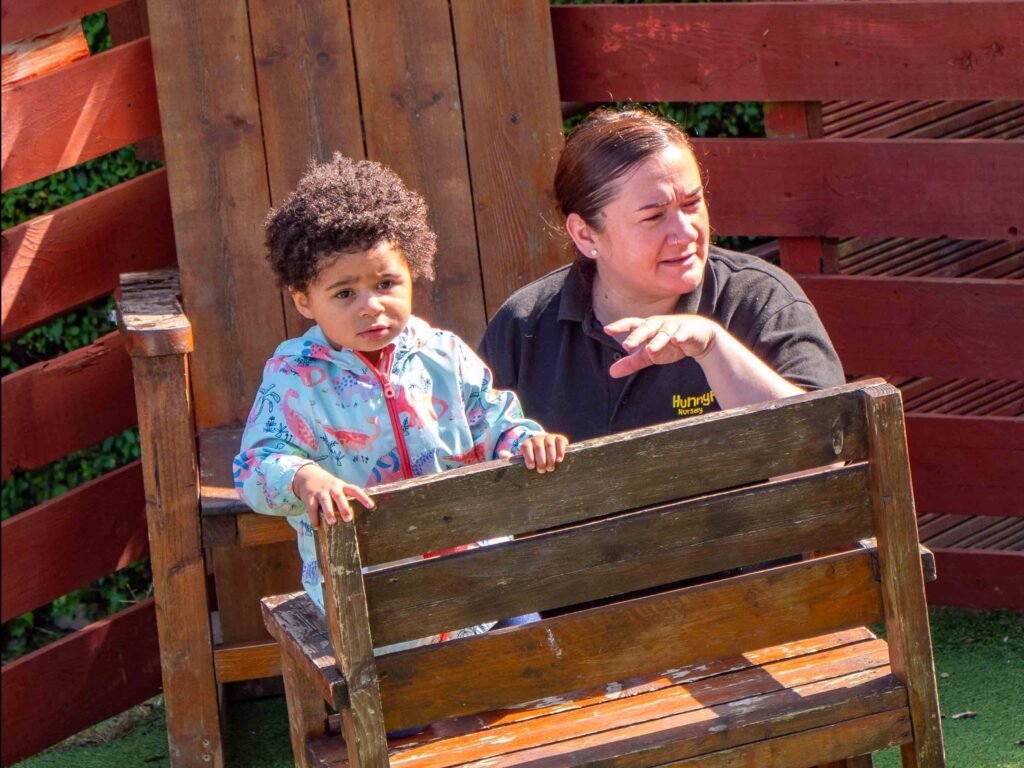
Pay attention to what you observe as well as the answers you receive. Notice whether children appear comfortable, whether practitioners get down to their level and whether interactions feel calm, respectful and responsive.
Hunny Pot Nursery’s Published Record
Parents can view Hunny Pot Nursery’s registration details and published inspection history on our official Ofsted provider page.
The most recent inspection currently listed there took place on 17 January 2024, before the new report-card system was introduced. It should therefore be read under the inspection framework and grading system in use at that time.
We encourage families to read the published report, ask us questions and visit the nursery to see our current provision. Our rooms and outdoor areas can also be viewed on our Explore Nursery page.
Making Your Final Nursery Decision
Understanding what is Ofsted and how its reports work can help you make a more informed childcare decision. A report can highlight important information about safeguarding, teaching, inclusion, wellbeing and leadership, but it is still only one part of the picture.
Combine the report with a nursery visit, conversations with staff and careful consideration of your child’s individual needs. The right setting should not only meet the necessary standards but also feel welcoming, responsive and suitable for your family.
To meet the team and explore Hunny Pot Nursery for yourself, book a nursery tour.