
A nursery menu should provide healthy, balanced and nutritious food while introducing children to an enjoyable variety of tastes and textures. Because some children eat several meals and snacks at nursery each week, parents understandably want to know what is being served and how individual dietary needs are managed.
Food at nursery supports more than physical growth. Relaxed and well-managed mealtimes can also encourage communication, independence and a positive relationship with food.
Why Is a Healthy Nursery Menu Important?
Young children are growing and developing rapidly. They need suitable food and drink to provide energy and a range of important nutrients throughout the day.
A varied nursery menu can also help children become familiar with different ingredients, flavours and textures. Children may need several relaxed opportunities to experience an unfamiliar food before they feel comfortable trying or enjoying it.
Nursery mealtimes can support children by helping them:
- Experience a varied selection of age-appropriate foods.
- Develop increasing confidence with cups and suitable cutlery.
- Recognise feelings of hunger and fullness.
- Take part in relaxed conversations with children and practitioners.
- Learn routines such as washing hands and sitting safely while eating.
- Develop positive and inclusive attitudes towards different foods.
What Are Nurseries Required to Provide?
The Early Years Foundation Stage requires meals, snacks and drinks provided by early years settings to be healthy, balanced and nutritious. Fresh drinking water must also be available and accessible to children.
Since September 2025, providers in England must have regard to the Department for Education’s Early Years Foundation Stage nutrition guidance. This means settings must take the guidance into account and should follow it unless there is a good reason not to.
The guidance covers areas including menu planning, suitable drinks, portion sizes, allergies, food safety, choking prevention and the nutritional needs of babies and children aged up to five.
What Should a Healthy Nursery Menu Include?
A healthy nursery menu should include a suitable balance of foods across the meals and snacks offered. The exact dishes and portions will depend on each child’s age, development, dietary requirements and the amount of time they spend at the setting.
Across its menu cycle, a nursery would normally provide a selection from the following groups:
- Starchy foods: Bread, potatoes, rice, pasta and suitable cereals.
- Fruit and vegetables: A varied selection prepared in forms appropriate for the children eating them.
- Protein foods: Meat, fish, eggs, beans, lentils and other suitable sources of protein.
- Dairy foods or suitable alternatives: Milk, yoghurt, cheese and appropriate alternatives where required.
- Suitable drinks: Fresh drinking water should always be available, with milk offered where appropriate.

Variety should be considered across the full day or week rather than judging the nutritional value of one ingredient or meal in isolation. A rotating menu can help ensure that children who attend on particular days are not always offered the same dishes.
How Should Food Be Prepared for Young Children?
Food must be prepared and served in a way that reflects a child’s age and stage of development. This is especially important because some foods can present a choking risk if they are not prepared correctly.
Nurseries should consider:
- The size, shape and texture of food.
- Whether hard or round foods need to be cut or prepared differently.
- Each child’s chewing and swallowing abilities.
- Appropriate seating and close supervision during meals.
- The needs of babies progressing through different stages of weaning.
- Any professional feeding advice provided for an individual child.
Children should sit safely while eating and be supervised by practitioners who understand how to respond if a child begins to choke. Food should never be used as a reward or punishment.
How Are Allergies and Dietary Requirements Managed?
Parents should tell the nursery about allergies, intolerances, medical dietary requirements and other relevant needs before their child begins attending. Information should be updated whenever a child’s circumstances change.
The nursery should have clear procedures for:
- Recording and communicating each child’s dietary requirements.
- Checking ingredients and allergen information.
- Preventing avoidable cross-contamination.
- Making suitable substitutions where necessary.
- Ensuring relevant staff understand the child’s needs.
- Responding to an allergic reaction or medical emergency.
Dietary needs connected with religion, culture or family choices should also be discussed with the setting. Parents can ask how alternative meals are planned so that their child still receives a varied and suitable diet.
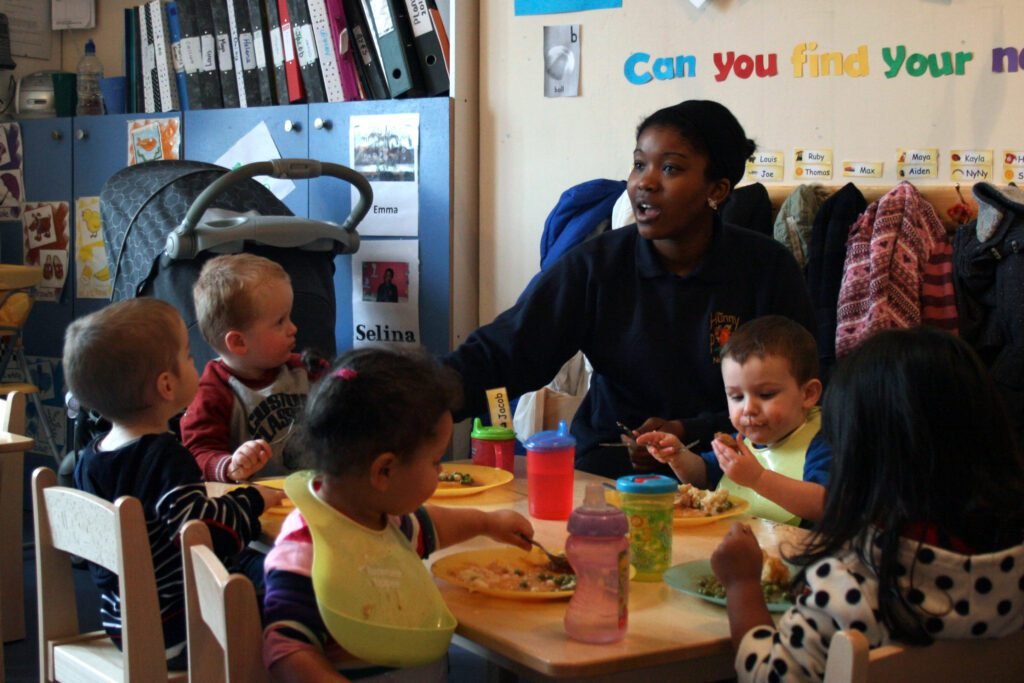
How Mealtimes Support Learning and Independence
Mealtimes are an important part of the nursery day. When children feel relaxed and supported, eating together can provide opportunities for conversation, social interaction and increasing independence.
Depending on their age and abilities, children may be encouraged to:
- Wash and dry their hands before eating.
- Use suitable cups and cutlery.
- Make manageable choices between appropriate foods.
- Serve small amounts with adult support.
- Talk about flavours, colours and textures.
- Help with simple routines such as clearing their place.
Children should not be pressured to finish everything on their plate. Practitioners can encourage exploration without forcing a child to eat or describing foods in ways that create anxiety or shame.
Questions Parents Can Ask About a Nursery Menu
Before choosing a nursery, parents may find it useful to ask:
- Can I see the current menu cycle?
- Where and how are meals prepared?
- How do you manage allergies and dietary requirements?
- How is food adapted for babies and younger children?
- How do you reduce choking risks?
- What drinks are available throughout the day?
- How will I be told what my child has eaten?
- How do practitioners respond when a child refuses a meal?
A nursery should be able to explain its approach clearly and discuss how it will respond to your child’s individual needs.
The Nursery Menu at Hunny Pot Nursery
At Hunny Pot Nursery, meals are freshly prepared each day and children are offered a varied and balanced selection of food. Our approach aims to make mealtimes relaxed, social and appropriate for each child’s stage of development.
Parents can find more information about our food provision on the Our Menus page. Please speak to our team directly about allergies, intolerances or other dietary requirements so that individual arrangements can be discussed properly.
Supporting Healthy Eating in the Early Years
A well-planned nursery menu helps children receive suitable food while becoming familiar with different tastes, textures and mealtime routines. Safe preparation, careful allergy management and responsive support are just as important as the dishes listed on the menu.
To meet our team, explore the nursery and ask questions about meals and daily routines, book a tour of Hunny Pot Nursery.