
Choosing a baby nursery in Huddersfield is a big decision. Leaving your baby in someone else’s care for the first time can feel daunting, and you want to know they will be safe, comforted and cared for as an individual.
You want the people looking after your baby to know when they are hungry, when they need a cuddle, how they like to settle to sleep and what makes them smile.
So, what should you look for when choosing a nursery for your baby?
This guide covers the questions worth asking, what to look out for on a nursery visit and how we care for babies in Roo’s, our baby room at The Hunny Pot Nursery.
What makes a good baby nursery?
A good baby nursery provides more than a safe place for your child while you work. It should offer warm, responsive care, familiar routines, opportunities to explore and strong communication with parents.
When visiting a nursery, look for:
- Attentive practitioners who respond warmly to babies and get down to their level.
- A named key person who gets to know your baby and their individual needs.
- Flexible feeding and sleep routines that take account of your baby’s usual pattern.
- Safe, suitable spaces for crawling, floor play, sensory exploration and outdoor experiences.
- Clear communication so you know how your baby has spent their day.
- A thoughtful settling-in process that gives you and your baby time to become comfortable.
Most importantly, notice how the team interacts with the babies already there. Do the children seem comfortable approaching adults? Are practitioners talking to them, responding to their cues and getting involved in their play?
These everyday interactions can tell you a great deal.
What age can a baby start nursery?
Babies can start nursery at different ages, depending on the setting and the family’s circumstances. At The Hunny Pot Nursery, we welcome babies from 12 weeks old.
Some parents need childcare when they return to work after maternity leave. Others wait until their baby is older. There is no single right time for every family.
If you are considering when to start, read our guide to when your child can start nursery.
It is also worth looking at childcare costs early on. Eligible working parents may be able to access funded childcare from the term after their baby turns nine months old. Our guide to nursery fees in Huddersfield explains more about funding and fees.
Why the key person matters
Your baby needs to feel safe with the adults caring for them. Building a close relationship takes time, consistency and an understanding of your child’s individual cues.
Under the Early Years Foundation Stage (EYFS), every child should have a key person. This practitioner helps build a relationship with your baby and works with you to support their care and development.
Your baby’s key person should want to know about their usual routines, how they communicate when they are tired or hungry, what comforts them and how they respond to new experiences.
When visiting a nursery, ask:
- Who will be my baby’s key person?
- How will they get to know my baby before and during settling in?
- What happens if their key person is away?
- How will you keep me informed about my baby’s progress?
Feeding and weaning
Babies have individual feeding patterns, and these can change quickly as they grow.
A good nursery will ask about your baby’s usual routine and discuss how feeding will be managed during the day. If your baby has bottles, ask how they are prepared, stored and given. If you are expressing breast milk, discuss the arrangements with the nursery team before your baby starts.
When your baby begins weaning, you should be able to talk to practitioners about the foods and textures they are used to, any allergies and how their meals will progress as they grow.
At The Hunny Pot Nursery, our in-house cook prepares meals fresh each day. We can talk you through the food arrangements for your child and explain what is included in your chosen booking.
You can also see our nursery menus.
Sleep and naps
Babies do not all sleep at the same times or for the same length of time. Their needs can change from week to week, too.
Ask a nursery how it accommodates individual sleep routines, where babies sleep, and how sleeping babies are monitored. The team should be able to explain its safe-sleep procedures clearly and discuss your baby’s usual routine with you.
You should also find out how you will be told about your baby’s naps and whether they slept for longer or less time than usual.
For further background, the NHS guidance on reducing the risk of sudden infant death syndrome (SIDS) is a useful resource.
Nappy changing and personal care
Nappy changes are a regular part of a baby’s day, but they are also an opportunity for one-to-one interaction. Practitioners can talk to your baby, respond to their expressions and help them feel comfortable.
When visiting, look at the changing area. Is it clean, organised and suitable for the babies using it?
Ask how often nappies are checked, how changes are recorded and how the nursery lets you know about nappy changes or any concerns.
It is also sensible to ask what you need to provide. At Hunny Pot, parents should bring nappies, wipes and spare clothes, along with any other personal items agreed with the team.
Helping babies learn through play
Babies learn by looking, listening, touching, moving and exploring the world around them.
A good baby room offers opportunities for floor play, tummy time when appropriate, rolling, crawling and exploring safe objects with different textures and sounds. As babies grow, their play can become more active and adventurous.
Sensory experiences, songs, stories, messy play and time outdoors all help babies explore at their own pace.
When you visit, look beyond the toys. Is there space for babies to move freely and safely? Do practitioners interact with them during play? Are activities suitable for different stages of development?
The NHS guide to your baby’s development provides useful information, and our article on key developmental milestones in babies explains more about what you might see as your baby grows.
How will the nursery comfort my baby?
Crying is one of the ways babies communicate. They may be hungry, tired, uncomfortable, or simply need reassurance.
Ask how practitioners respond when a baby is upset and how they learn what helps each child settle. Your baby may have a favourite comforter, dummy or particular way of being held or soothed.
A nursery should also ask you plenty of questions about your baby. The more the team understands about your child’s usual behaviour and routines, the easier it is to provide familiar, reassuring care.
It is completely reasonable to ask how the nursery will keep you informed if your baby has been unsettled during the day.
Communication with parents
When your baby first starts nursery, you may find yourself wondering how they are getting on throughout the day. Clear, regular communication can make the transition easier for everyone.
Ask what information the nursery shares each day and how you can pass on important updates in the morning. For example, you may want practitioners to know that your baby had a disturbed night, has started teething or is feeding differently.
At Hunny Pot, parents receive a daily update about their baby’s sleep, feeds, nappies, play and mood. We know that these details matter, particularly during the early weeks.
What baby care looks like in Roo’s room at The Hunny Pot Nursery
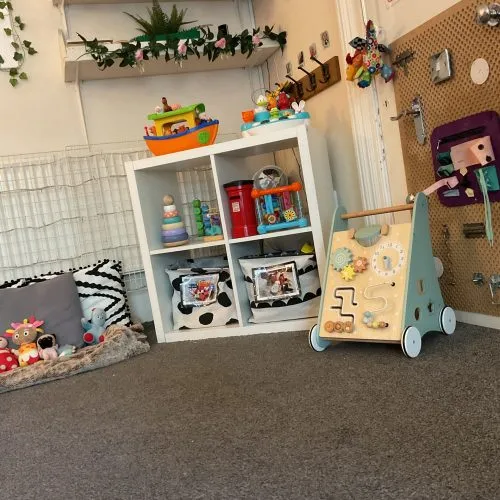
Roo’s is our baby room for children aged 12 weeks to two years. It is a large, open-plan space designed around babies’ needs, with soft carpeted areas for floor play and crawling, a messy-play zone, dedicated eating spaces and a separate outdoor area for babies.
We want babies to have the space and encouragement to explore, while receiving the individual care and reassurance they need.
Here is what families can expect at Hunny Pot:
- Adult-to-baby ratios: We work to a ratio of one adult to three babies in our Roo’s room.
- Individual routines: We agree on feeding, bottle and sleep routines with parents and adapt them as babies grow.
- A named key person: Every baby has a key person who helps build a relationship with them and acts as a main point of contact for parents.
- Daily updates: We share information about your baby’s sleep, feeds, nappies, play and mood.
- Freshly prepared food: Our in-house cook prepares meals daily. We can explain our food arrangements and any applicable meal packages when discussing your booking.
- Settling in at your baby’s pace: We work with families to help babies become familiar with the room, the practitioners and their new routines.
- Personal belongings: We will explain what you need to bring, including nappies, wipes, spare clothes, bottles and any agreed comfort items.
You can find out more about Roo’s baby room and see how it fits into life at Hunny Pot.
When your child is ready to move on, usually around their second birthday, we support their transition into Kanga’s toddler room. We work with families to make the move as comfortable as possible.
The Hunny Pot Nursery has been caring for Huddersfield families since 1994. We are rated Good by Ofsted.
Questions to ask when visiting a baby nursery
It can be difficult to remember everything you want to ask when you are looking around a nursery. This checklist is a useful starting point:
- What is the adult-to-baby ratio in the room?
- Who will be my baby’s key person?
- How will you get to know my baby before they start?
- How do you follow individual feeding and sleep routines?
- Where do babies sleep, and how are they monitored?
- How are bottles and expressed breast milk handled?
- What happens when my baby is upset?
- What information will I receive about my baby’s day?
- Do babies have their own outdoor space?
- What do I need to provide?
- How does settling in work?
- What food and meals are included in the fees?
Do not feel you have to rush through your questions. A good nursery team should be happy to explain how things work and help you decide whether the setting feels right for your family.
Visit the Roo’s room with your baby
Reading about a nursery is helpful, but visiting in person gives you a much better feel for the environment and the people who will care for your baby.
Visit Roo’s at The Hunny Pot Nursery, 58 Rawthorpe Lane, Huddersfield, HD5 9NU. You can meet the team, see the baby room and outdoor area, and talk through your questions about feeding, sleep, settling in and fees.
We are open Monday to Friday, 7:30 am to 6:00 pm, 51 weeks a year.
Book a tour and visit Roo’s with your baby
We would be happy to talk through your childcare options and help you decide whether Hunny Pot is the right fit for your family.
Baby nursery FAQs
What age can my baby start nursery?
At The Hunny Pot Nursery, babies can start from 12 weeks old. The right time depends on your family’s circumstances and your baby’s needs. We can talk you through the arrangements and settling-in process before you decide.
How do babies sleep at nursery?
Babies’ sleep routines are discussed with parents so that practitioners understand their individual needs. When visiting, ask the nursery to explain where babies sleep, how they are monitored and how sleep information is shared with families.
What should I bring for my baby?
At Hunny Pot, parents should bring nappies, wipes, spare clothes, bottles and any agreed comforters or personal items. We will explain the arrangements for food and meals, including whether a meals package applies to your booking.
How do feeding routines work?
We discuss your baby’s usual feeding pattern with you before they start and review it as they grow. If your baby has bottles or expressed breast milk, talk to the team about the arrangements. When your baby begins weaning, we can discuss their stage of development and how meals will fit into their day.
How does settling in work?
Settling in gives your baby time to become familiar with the room, the practitioners and their new routines. We work with parents to help the process suit their baby rather than expecting every child to settle in the same way. Read our guide to settling into nursery life.
How do I arrange a visit?
You can book a tour online to visit Roo’s, meet the team and ask questions about places, fees and availability.